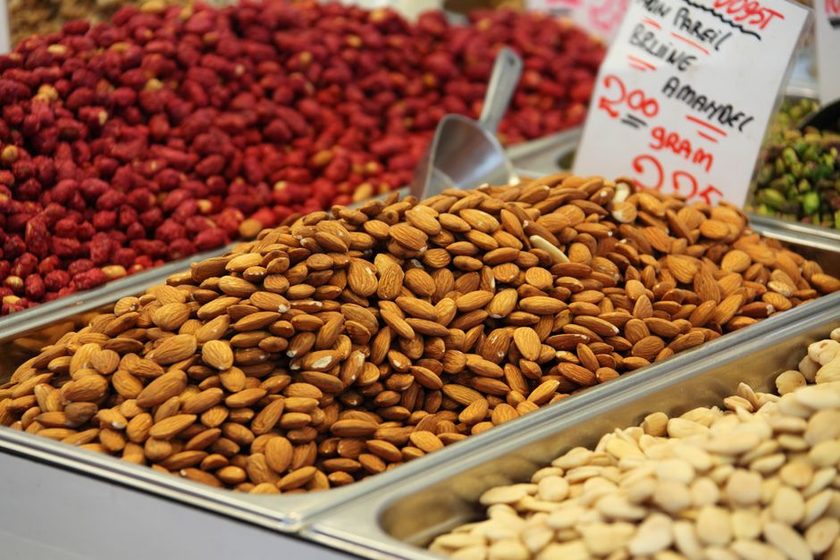
No nutrition textbook contains a chapter on superfoods. No regulatory body maintains a list. No committee of scientists ever convened to decide whether a berry qualifies. The word has no technical meaning, and yet it appears on packaging, in headlines, and in conversation as though it were a category somebody defined and everyone agreed to. Where it came from explains why it keeps shifting — and why the food on the throne this year was unheard of ten years ago.
The word has a paper trail
The earliest widely cited use is commercial, not scientific. After World War I, the United Fruit Company ran an aggressive campaign in North America to popularize the banana — still a novelty in many households. The advertising leaned on nutrition, circulating pamphlets positioning the banana as an ideal food for children and for the sick. Newspapers picked up the framing, and the banana became, in the language of the day, a super food. The point of the exercise was moving inventory, and it worked.
The word then went quiet for decades before returning in the 1990s and 2000s, attached to imported fruits with a story: açaí from the Amazon, goji from the Himalayas, noni, mangosteen, baobab. The pattern rarely varied. A plant with a long history of ordinary local use gets a distant origin, a compelling antioxidant number, and a price several times that of an apple. In 2007 the European Union effectively banned the term on packaging unless the health claim behind it was authorized. The word survived anyway — it migrated into headlines, blog posts, and menu descriptions, where no such rule applies.
Why the label is unstable by design
A useful category holds still. This one cannot, because its function is novelty. The superfood of any season needs to be somewhat unfamiliar; a food everyone already eats carries no persuasive charge. So the crown moves — wheatgrass to açaí to kale to turmeric to moringa — not because new evidence arrived, but because the previous occupant became ordinary. Kale is instructive. It went from garnish to phenomenon to supermarket staple in about a decade, losing its superfood status by becoming too available to be special. Its nutrient content never changed once.
The label tracks novelty, not nutrition. That's why last decade's superfood is this decade's side dish, with an identical nutritional profile.
There is a second problem, subtler than the first. The evidence used to crown a food is often a laboratory finding — a compound does something interesting to cells in a dish, or to rodents at a dose no human would eat. That finding is not fraudulent. It is an early step, and the distance between a cell-culture result and an effect in a person eating a normal portion is enormous. Most compounds don't survive the journey; many are poorly absorbed or dismantled by the liver within minutes. Why one striking result rarely settles anything is covered in Why Single Studies Rarely Settle Anything.
Claims, and what holds up
| Common claim | What's actually supported |
|---|---|
| "Superfoods are an established nutritional category." | The term has no scientific or regulatory definition. It originated in fruit advertising and has been restricted on EU packaging since 2007. |
| "This berry has more antioxidants than any other food." | Antioxidant capacity is usually measured in a test tube. The USDA withdrew its own ORAC database in 2012, noting the values had no established relevance to human health. |
| "An exotic import is nutritionally superior to local produce." | Nutrient profiles overlap heavily. Frozen berries, cabbage, beans, and oats deliver comparable fiber and micronutrients at a fraction of the price. |
| "Adding a superfood improves an ordinary diet." | Dietary patterns — variety, fiber, how much is cooked at home — track with outcomes far more consistently than any single ingredient. |
| "Studies show this compound is powerful." | Frequently true in cells or in rodents at high doses. Bioavailability in humans eating normal portions is often low, and results in people are commonly mixed or null. |
The ORAC episode deserves a moment. For years, antioxidant scores drove marketing across the produce aisle. In 2012 the U.S. Department of Agriculture removed the database from its site, explaining that the values were being misused and that no meaningful link had been established between test-tube antioxidant capacity and any benefit in a living person. The scores kept circulating for years after their own source disowned them.
What the data actually points toward
Strip out the hierarchy and the research becomes less exciting and more consistent. What shows up across large observational studies and the dietary trials that exist is not a hero ingredient but a shape:
- Variety over intensity. A wide range of plants appears to matter more than a large amount of any one of them.
- Fiber, repeatedly. Whole grains, beans, lentils, and vegetables show up in association after association. Beans are cheap, boring, and about as well-supported as food gets.
- Whole foods over extracts. The isolated compound frequently underperforms the food it came from, suggesting the matrix — fiber, fat, the other hundred compounds — does something a capsule can't reproduce.
- Consistency over episodes. What is eaten most weeks matters more than what is eaten in any particular month.
None of that produces a product. It's difficult to build a premium brand around lentils, and impossible to make "eat a lot of different plants, most of the time" sound like a discovery. The superfood label solves a marketing problem by converting a diffuse pattern into a purchasable object.
A fair reading
Nothing here argues against blueberries. They are genuinely good food: fiber, vitamin C, polyphenols, and they taste like blueberries. The objection is to the ranking, and to what it costs — money spent on a powder that a bag of frozen fruit would have covered, and attention pulled toward one ingredient and away from the pattern the evidence supports. The same instinct to buy a discrete solution to a diffuse problem drives the market described in Supplements and the Evidence Gap.
A food isn't super. A diet might be decent. Less satisfying than a shelf of jars, but it's where the data keeps pointing.