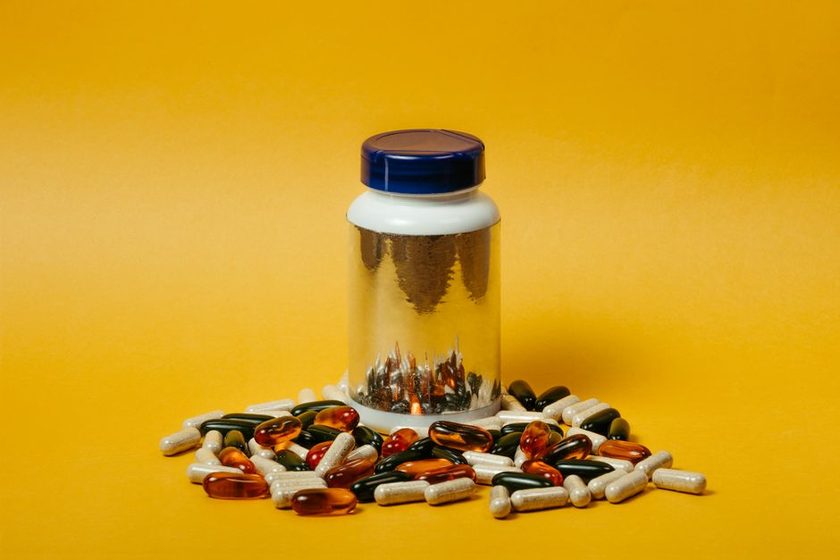
A bottle on a shelf carries a quiet implication: somebody, somewhere, checked. It has a name, it lists a dose, it sits near the pharmacy counter — surely a gate was passed. That assumption is the most common misunderstanding in the category, because the truth is neither "supplements are unregulated" nor "supplements are tested like medicines." It is a third thing, and that is where the confusion lives.
The category was invented, deliberately
In the United States, dietary supplements occupy a legal space carved out by a 1994 statute that placed them closer to food than to medicine. The consequence is a reversal of order. A new prescription drug must show a regulator, before sale, that it does something and that its risks are acceptable. A supplement generally does not. Safety is the manufacturer's responsibility, and the agency's main lever arrives afterward — action against a product already on the market, usually once a problem surfaces. Britain and the EU run different machinery with a comparable gap: food supplements sit under food law rather than the approval pipeline for medicines.
None of this is a scandal or a secret. It is a policy choice about a category holding both a multivitamin and a concentrated botanical nobody had heard of five years ago. But the shelf certifies very little.
Read the claim, not the packaging
Label wording is more carefully engineered than most shoppers realize. There is a legal distinction between saying a product "supports normal immune function" and saying it "treats infections." The first is a structure or function claim; the second is a disease claim, which pulls a product into drug territory. The industry is fluent in the first kind, and the asterisk near the bottom of the panel — noting the statement has not been evaluated by the regulator — is the tell.
Once a reader sees that phrasing as a compliance instrument rather than a summary of findings, the aisle reads differently. "Supports." "Helps maintain." "Promotes." These are not stronger claims trimmed for modesty. They are the strongest claims permitted without the evidence medicines must produce.
The gap is not between supplements and drugs. It is between what a bottle is required to prove and what the person holding it assumes has already been proven.
What "studies show" is usually showing
Almost every product has a research page. The question is what kind of research got listed there, and the honest answer is usually: the early kind.
- Cell studies. An isolated molecule shifts a marker on a bench, at a concentration no capsule could deliver to a living person.
- Animal studies. Useful for direction, weak for translation, often dosed implausibly.
- Small, short human trials. Thirty participants over four weeks, measuring a blood marker rather than anything anyone notices.
- Reviews of the above. A review of thin studies is still thin. Pooling does not manufacture rigor.
- Trials funded by the seller. Not automatically wrong, but read the methods, not the press release.
None of these is illegitimate science. They are early links in a chain that mostly goes unfinished, because finishing it is expensive and — for an ingredient nobody can patent — commercially pointless. The result is a literature that is large and inconclusive at once, the same trap described in why single studies rarely settle anything.
The dose in the paper and the dose in the bottle
Even when a decent human trial exists, it may not be a trial of the product being sold.
Turmeric is the standard example. Most of the research uses curcumin extracts formulated for absorption — bound to a carrier, paired with a pepper compound, or milled fine enough to survive the gut. Plain powdered turmeric behaves differently in the body. A label can cite a study honestly and still contain something that study never tested. The problem recurs across botanicals: plant part, solvent, and standardized concentration all matter, and none is guaranteed to match.
Where the ground is firmer
Skepticism about the category is not skepticism about every product in it. The clearest case for supplementation is correcting a documented shortfall, and it is well established: folic acid before and during early pregnancy, vitamin B12 for people who eat no animal foods, vitamin D where winter sun is scarce, iron when a blood test and a clinician say so.
Notice what those share. Each targets a specific deficiency, in a specific population, at a dose someone can justify — a much narrower proposition than "supports vitality," which is why it holds up. The failure mode is stretching: a bounded finding becomes a general promise, and the stretching is where the evidence disappears.
| The common claim | What actually holds up |
|---|---|
| "If it's on the shelf, someone verified it works." | Pre-sale efficacy review applies to medicines, not supplements. Presence on a shelf is not a finding. |
| "Studies show it works." | Often true and nearly uninformative. Which species, how many people, how long, funded by whom? |
| "It's natural, so the risk is low." | Dose and interaction determine risk, not origin. Concentrated botanicals can interfere with prescription medicines. |
| "The label matches the research." | Frequently the trial used a different formulation, extract, or dose than the bottle contains. |
| "A certification seal means it's effective." | Seals attest to contents and purity. They are silent on whether the contents help. |
Questions before the checkout
- What specific shortfall is this meant to address, and is there reason to think it exists here?
- Does the cited research involve people, at this dose, in this form — or cells, mice, and an extract with another name?
- What does it interact with? That question belongs to a pharmacist, and pharmacists answer it for free.
- What would count as it not working — and is that even measurable from the outside?
The last one is the most revealing. A product whose benefit cannot fail to appear is not offering evidence. It is offering an unfalsifiable feeling — fine to buy, as long as everyone is clear that is the purchase. Origin claims deserve the same scrutiny, since natural does not mean gentle either.