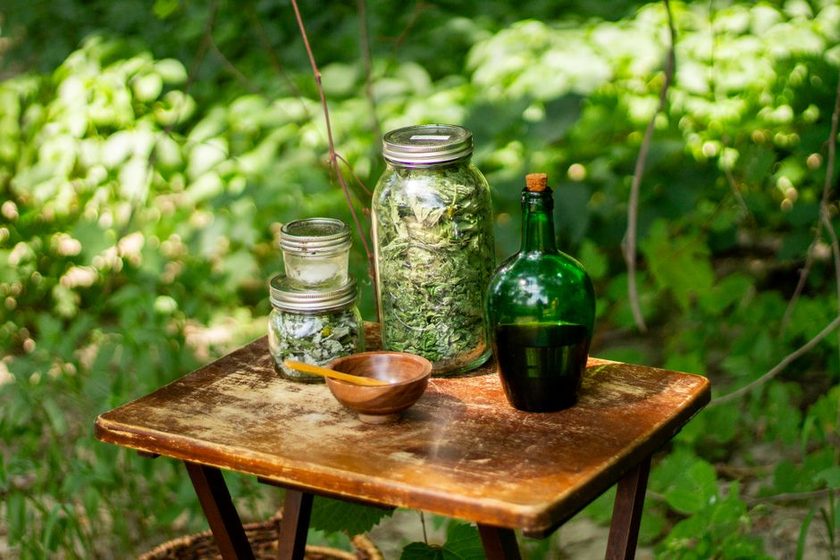
The word does a lot of quiet work. Put "natural" on a package and something shifts before a single ingredient is read — the product feels softer, older, closer to a garden than a laboratory. That reaction is real and mostly automatic. It is also, as a guide to how a substance will behave inside a body, close to useless. Origin is not a safety property. It never has been.
The shortcut behind the reaction
Philosophers gave this reflex a name a long time ago: the appeal to nature. It is the assumption that because something occurs in nature, it is good, and because something was made in a factory, it is suspect. Stated that baldly, almost nobody agrees with it. Stated in a shopping aisle at six in the evening, almost everybody uses it.
What makes the shortcut sticky is that it works often enough to feel earned. Plenty of natural things are benign. Plenty of heavily processed things deserve scrutiny. The problem is that the rule has no mechanism behind it — nothing about where a molecule came from tells you what it does when it reaches a receptor. Nature is not a curator. It has no interest in whether a compound is kind to the organism that swallowed it, and a great many plants evolved their chemistry specifically to be unkind to the things that eat them.
What the label is actually regulated to mean
Here is the part that surprises people: in U.S. food labeling, "natural" is not a defined safety category. The Food and Drug Administration has never formalized a regulation for the term; it has only expressed a long-standing informal view that it means nothing artificial or synthetic has been added that would not normally be expected in the food. That view says nothing about production methods, nothing about nutrition, and nothing whatsoever about whether the product is good for anyone.
The Department of Agriculture applies a narrower version to meat and poultry — minimally processed, no artificial ingredients — which is a genuine standard, but a standard about processing, not about effects. "Organic" is a real certification with real auditing, and it too is about how something was grown, not about how it behaves once eaten. None of these words is a health verdict. They are supply-chain descriptions wearing a health costume, which is roughly the same trick examined in the story of the word "superfood".
A label that describes where something came from is being asked, constantly, to answer a question about what it will do. It cannot.
Concrete things, entirely natural, entirely potent
Abstractions rarely move anyone. Specifics might.
- Foxglove. A cottage-garden flower. Its cardiac glycosides act directly on heart muscle — powerfully enough that a purified version became a real medicine, and dangerously enough that the plant itself has poisoned people who mistook the leaves for comfrey.
- The death cap mushroom. Responsible for the majority of fatal mushroom poisonings worldwide. Its amatoxins are heat-stable, so cooking does nothing, and symptoms often pause for a day before the real damage announces itself.
- Castor beans. The oil is a pantry staple. The seed also contains ricin, one of the more toxic proteins known.
- Aflatoxin. Produced by molds that grow on peanuts, corn, and tree nuts in warm storage. Entirely natural, and among the most closely monitored contaminants in the global food supply.
- Tobacco and arsenic. Both grow out of the ground with no help from any chemist.
The list is not meant to frighten anyone away from gardens or peanuts. It is meant to break the association. If "natural" were a reliable signal of gentleness, none of these could exist — and they all do, unremarkably, in the same category the marketing word points at.
The interaction problem nobody puts on the box
The more practical issue is quieter than poisoning. It is interaction. Botanical preparations are not inert background; some of them are metabolically loud.
St. John's wort is the standard teaching example. It induces a family of liver enzymes that a large share of prescription medicines depend on for clearance, which can lower the blood levels of those medicines — sometimes far enough to matter. Grapefruit juice does the reverse, inhibiting the same enzyme system and pushing levels of certain drugs up. Neither of these is exotic. One is a shrub, the other is breakfast. And because a botanical bought off a shelf feels like a food rather than a pharmacological agent, it is exactly the thing people forget to mention when a clinician asks what they are taking.
Claims, and what survives contact with the evidence
| The familiar claim | What's actually supported |
|---|---|
| Natural means safe or gentle | Origin predicts nothing about potency; many plant compounds evolved specifically as chemical defenses |
| "Natural" on a food label is a regulated safety standard | The term has no formal safety definition in U.S. food labeling; it addresses added ingredients at most |
| Herbal products can't interfere with medication | Several botanicals measurably alter drug-metabolizing enzymes and can shift medication levels |
| Synthetic versions are inferior copies | Many are the identical molecule; differences, where they exist, come from the surrounding matrix and dose |
| If it's sold openly, it's been vetted like a drug | Botanical supplements generally face lighter pre-market review than pharmaceuticals |
A better question than "is it natural?"
The useful questions are duller and more specific. What is the actual compound, and at what dose? Is there a plausible mechanism, and has anyone measured it in people rather than in cells? What else is being taken alongside it? Is the amount in this product anywhere near the amount in the research being cited — a gap that turns up constantly, as the supplement evidence gap shows.
Toxicologists have been making this point since the sixteenth century, when Paracelsus observed that the dose makes the poison. Water, salt, oxygen, and vitamin A all follow the rule. So does everything in the herbal aisle. Nature supplies the chemistry; it does not supply the judgment.