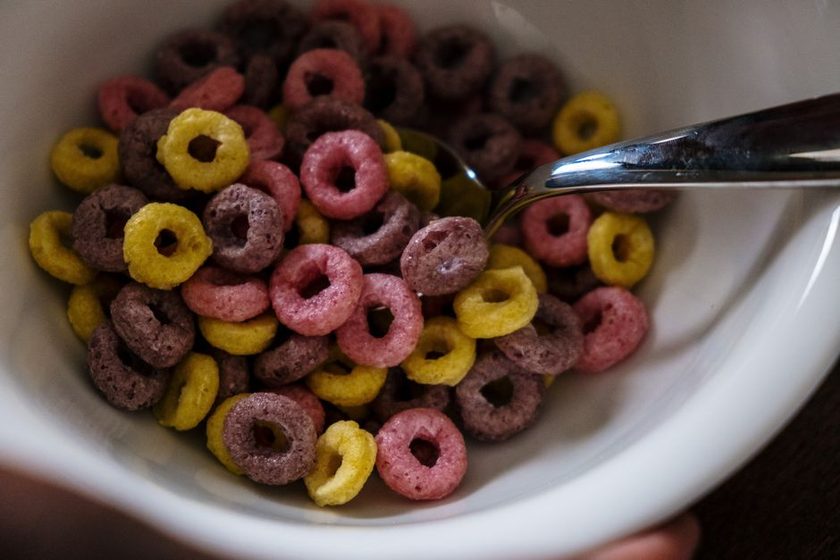
"Breakfast is the most important meal of the day" is one of the few nutrition slogans almost everyone can recite. It has the cadence of folk wisdom — the kind of thing a grandmother says, worn smooth by a century of repetition. It is also, in its origins, closer to a jingle than a finding. The sentence circulated before there was much research to support it, and the research that eventually arrived has been far more equivocal than the slogan lets on.
Where the sentence came from
The phrase surfaces in American print in the early twentieth century, when cereal manufacturers were building an entirely new eating habit from scratch. The Battle Creek sanitarium and the cereal companies in its orbit had a product that made sense only at one time of day, and a public accustomed to eating whatever was left over from dinner. The advertising did what advertising does: it made the meal a matter of virtue. By the 1940s a nationwide campaign, run with a bacon producer and a nutritionist on retainer, had pushed the phrase into something like common knowledge — accompanied, conveniently, by the suggestion that a proper breakfast involved bacon and eggs.
This is not a conspiracy story. Companies advertise, and some advertising lands on true things by accident. The point is narrower: the slogan's authority doesn't come from where people assume it does. It arrived as a marketing premise and acquired the tone of scientific consensus through a century of repetition, which is a different thing entirely.
The metabolism claim, specifically
The most durable piece of the folklore is the mechanism: skip breakfast, and the body enters conservation mode, slowing the metabolism. It's a vivid image and it survives because it feels intuitive. It does not describe what measurement shows. Resting energy expenditure is remarkably stable across a missed meal. Controlled work on short fasts — the kind that occur between dinner and a late lunch — finds no meaningful drop in the rate at which the body burns energy at rest; the earliest hours of fasting are associated with a slight uptick in circulating catecholamines and no decline in expenditure. The real adaptations in metabolic rate involve sustained energy restriction over weeks and months, not the interval between 7 a.m. and noon.
A missed breakfast is a fourteen-hour gap between meals. The body has no mechanism that reads that as an emergency — it is, quite literally, what the word "breakfast" was coined to describe.
What the studies show, and what they don't
The observational literature is large and persuasive at first glance. People who eat breakfast tend, on average, to have somewhat better health markers than people who skip it. The association is real and has been replicated. The trouble is what else travels with it.
In most of these datasets, habitual breakfast eaters also smoke less, drink less, exercise more, sleep on a regular schedule, and have more money and more control over their mornings. Skipping clusters with night shift work, stress, and lower income. Untangling the meal from the life around it is close to impossible in an observational design. This is the healthy-user problem, and it's one reason a single study rarely settles anything.
Randomized trials — assigning people to eat or skip breakfast and watching what follows — produced far less drama. The consistent finding is that the assignment changes little on its own. Those assigned to breakfast were somewhat more active in the morning; those assigned to skip it ate somewhat more later. The compensations roughly canceled. A widely noted 2013 analysis of breakfast research found the studies routinely described in causal language their designs could not support.
| Common claim | What's actually supported |
|---|---|
| "Skipping breakfast slows your metabolism." | Resting energy expenditure does not measurably decline over a short overnight-to-midday fast. Real metabolic adaptation involves sustained restriction over weeks. |
| "Studies prove breakfast eaters are healthier." | Observational studies show an association. Breakfast eaters also tend to smoke less, drink less, and sleep more regularly — confounders the design cannot separate from the meal. |
| "Everyone needs to eat within an hour of waking." | No trial supports a universal window. Appetite on waking varies widely and is shaped by schedule, sleep timing, and habit. |
| "Breakfast improves concentration." | The clearest evidence is in children and adolescents, especially those arriving at school having eaten little. Findings in well-fed adults are mixed and often small. |
| "Breakfast is the most important meal of the day." | The phrase entered circulation through early-twentieth-century cereal and bacon advertising, not research. Overall dietary quality tracks outcomes more consistently than the timing of any one meal. |
The honest answer is "it depends," and on what
Uncertainty is not ignorance. The literature does support some reasonable distinctions:
- Children and teenagers have the strongest case. Studies of school breakfast programs report improvements in attention and classroom performance, most pronounced among students who would otherwise arrive having eaten nothing.
- Certain medical situations — managing blood glucose, taking medication with food, pregnancy — are reasons individual guidance should override a slogan.
- Content matters more than timing. Frosted cereal and juice is not made virtuous by being eaten at eight in the morning. Reading what's in it beats watching the clock, a topic taken up in Reading a Nutrition Label Without Fear.
- Preference is data. People who feel unwell without breakfast, and people who feel unwell with it, are both describing something real.
Why the slogan persists anyway
Nutrition advice prefers rules to ranges, because rules are portable. "It depends on your schedule, your appetite, your age, and what you'd otherwise be eating" is accurate and nearly useless as a headline. So the rule survives, gets repeated by people with no commercial stake at all, and hardens into something that feels rude to question.
The defensible position is unglamorous. Breakfast is a meal. For some people it's genuinely helpful; for others it's an obligation carried since childhood on the authority of a bacon advertisement. Neither group is doing anything wrong, and the century-old slogan turns out to have been describing a preference all along.